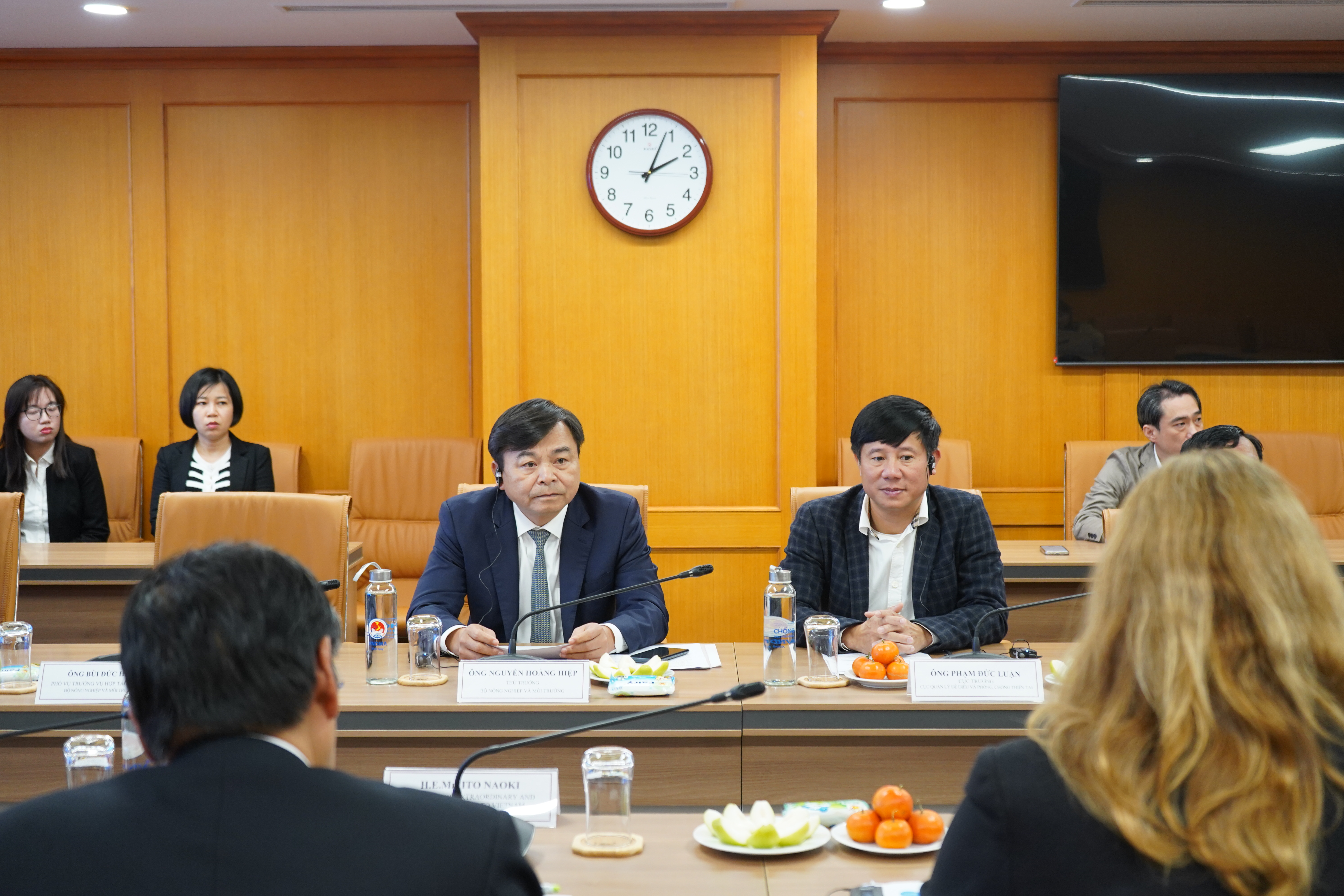
According to Deputy Minister Nguyen Hoang Hiep, Typhoon Yagi in 2024 and severe floods and landslides in 2025 caused significant human and economic losses and highlighted persistent gaps in risk information, early warning, and local preparedness.
"The increasing frequency and intensity of climate disasters in Viet Nam have underscored the urgency of strengthening disaster risk reduction, preparedness, and early warning systems through sustained and targeted investments, particularly for children and vulnerable communities. With the close engagement and strong commitment of the Embassy of Japan, and UNICEF Viet Nam’s coordinating role, Phase II of the project represents our shared and lasting commitment to safeguarding the future of Viet Nam’s younger generation in the face of disasters," he affirmed.
During the 2026 - 2030 period, around 27 million children and their communities across Viet Nam will benefit from strengthened DRR planning, early warning, and preparedness. Targeted activities in Cao Bang, Lao Cai, Nghe An, and Ha Tinh provinces, will support an estimated 2.2 million children and 7 million people living in high-risk areas.
Leaders of the Ministry of Agriculture and Environment place their greatest expectation in this phase on the transfer of value: “I hope the project will distill the valuable skills and experience of Japan in educating and raising awareness among Japanese children and apply them in Viet Nam. At the same time, these lessons should be adapted and localized to best suit the specific types of disasters unique to each region.”
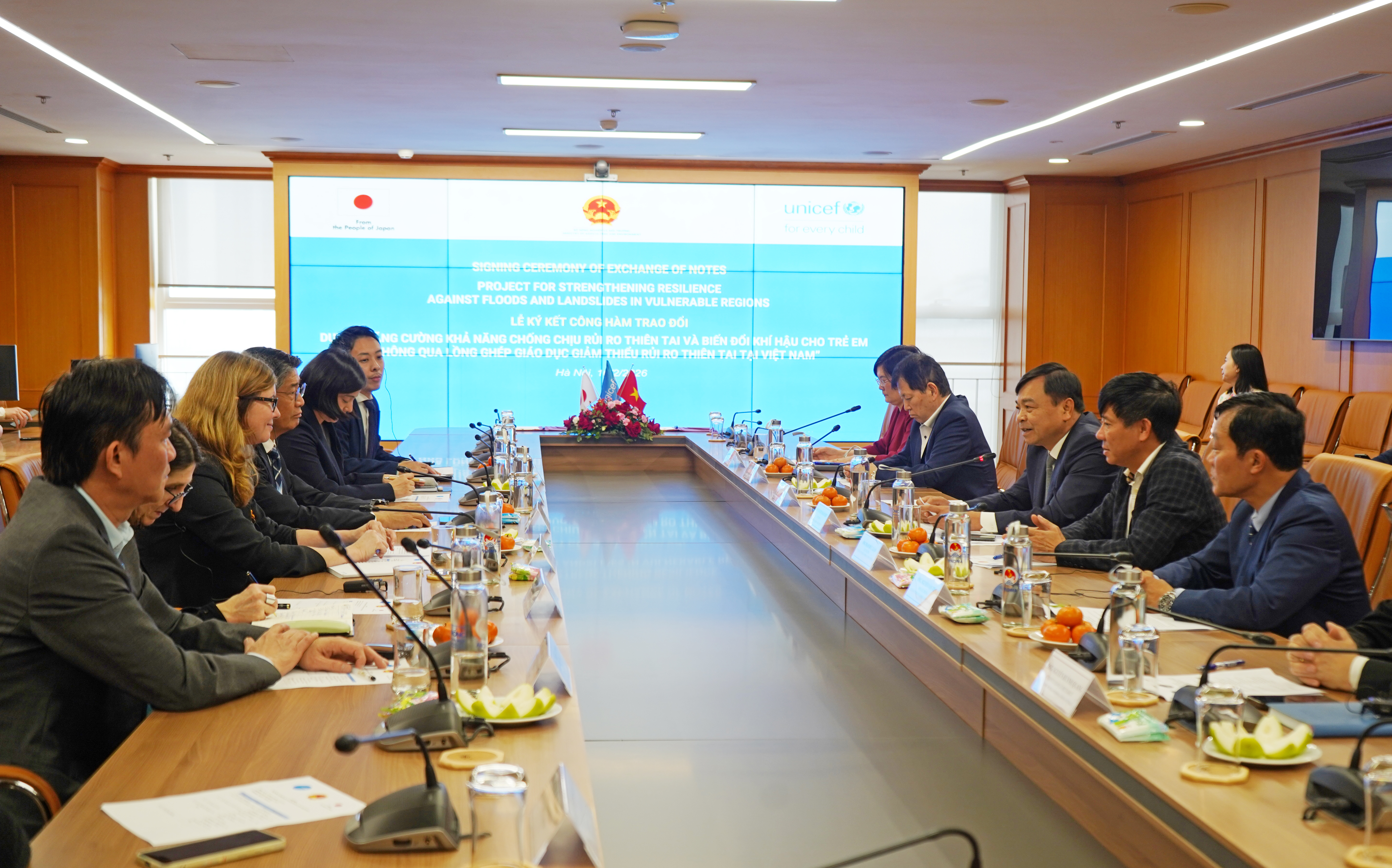
To ensure effective implementation of the project over the five-year period, the Deputy Minister called on the Viet Nam Disaster and Dyke Management Authority and UNICEF Viet Nam to strengthen coordination further, working “as one” in implementation. All activities, he stressed, must be substantive, child-centred, and ensure that Japan’s best knowledge and experience are fully absorbed and applied effectively in Viet Nam’s schools and communities.
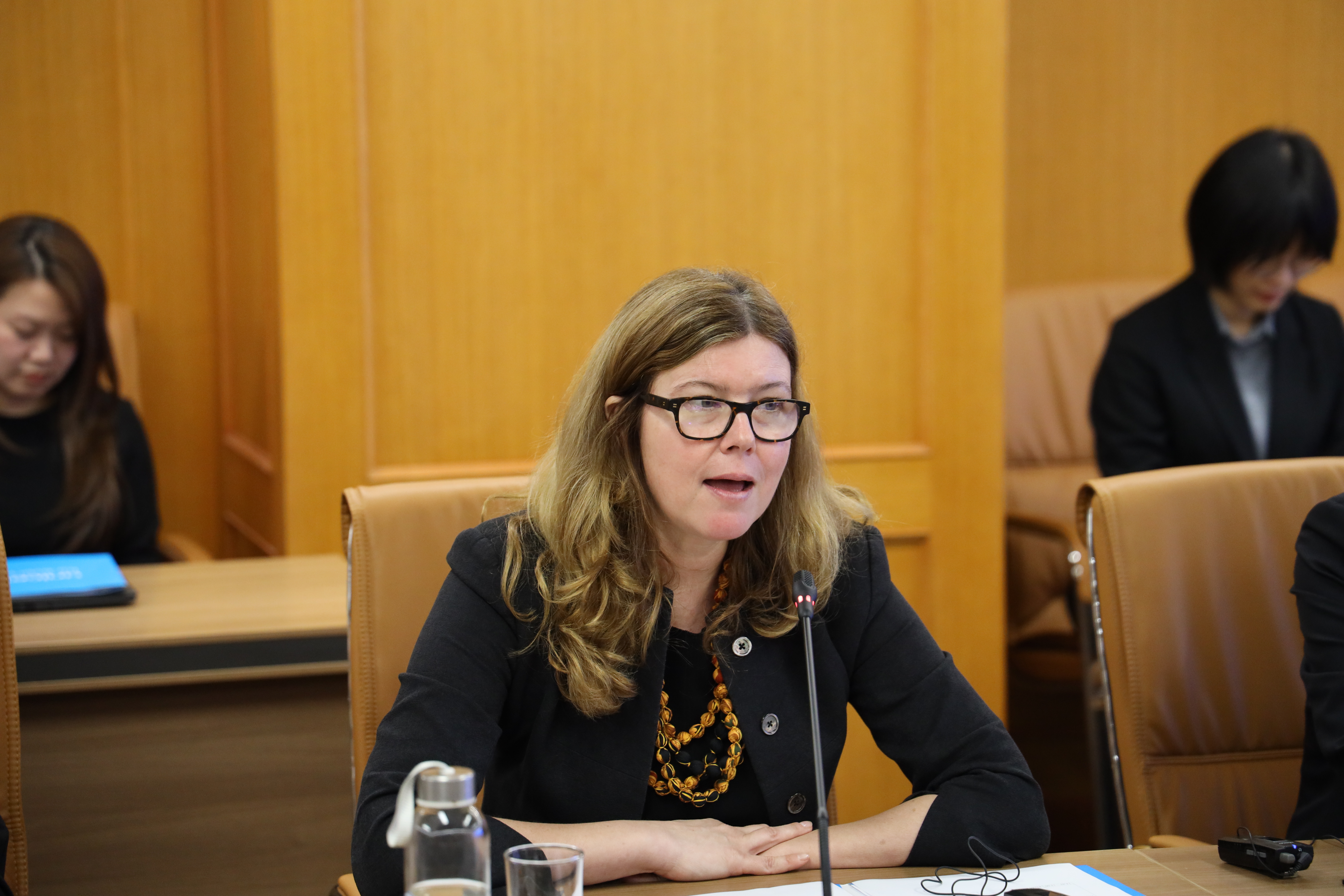
“Children contribute the least to climate change, yet they suffer the most from its impacts. A child-centred approach to disaster risk reduction ensures that disaster management systems and social sectors are inclusive and responsive to children’s needs, while strengthening the prevention and resilience capacities of children, families, and communities,” said Ms. Silvia Danailov, Representative of UNICEF in Viet Nam.
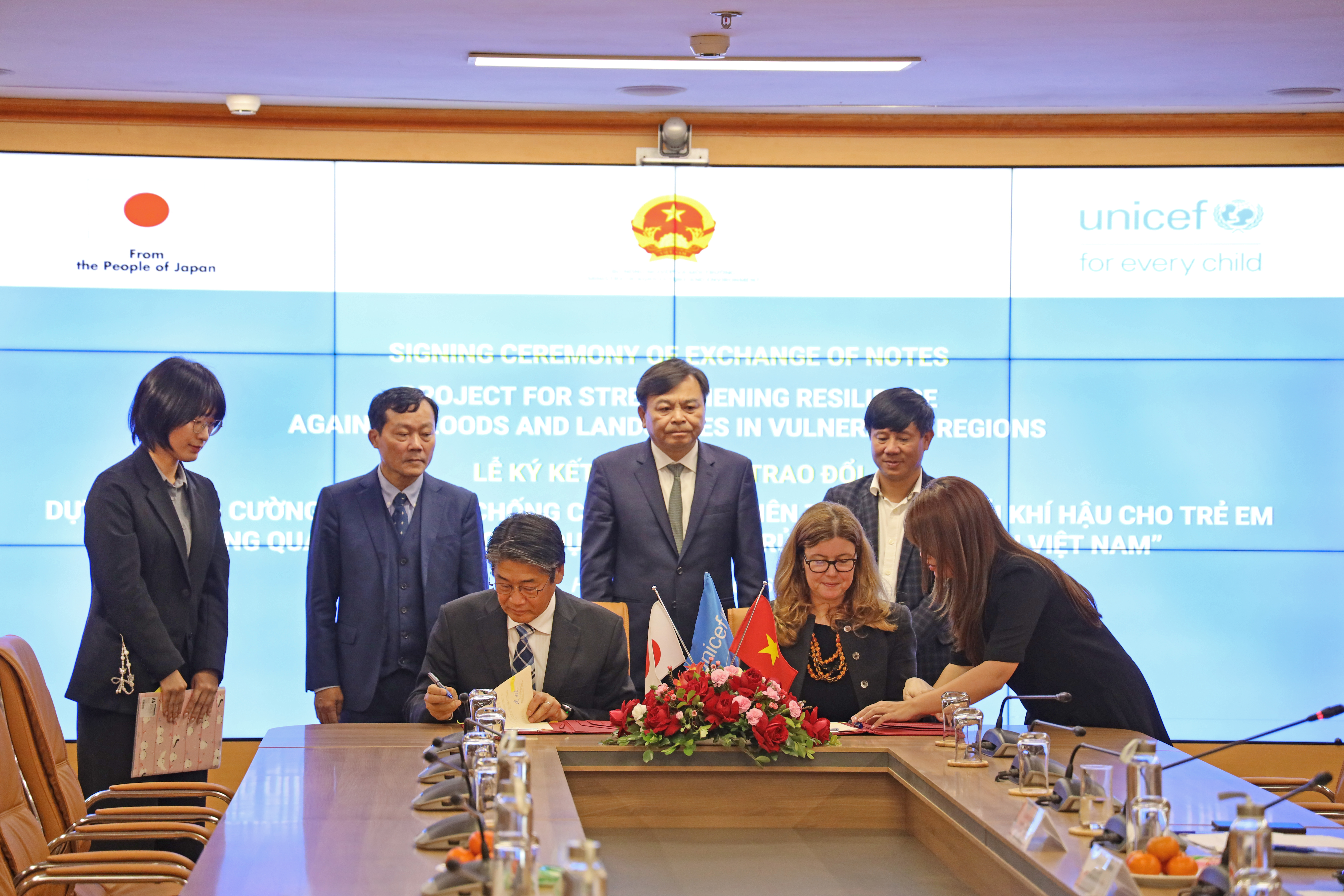
Through the newly launched project for the 2026 - 2030 period, Viet Nam will strengthen disaster risk information systems to support planning and policy-making at both central and local levels, as well as early warning efforts.
In particular, disaster risk reduction and climate change education will be enhanced and integrated into the national education curriculum, equipping children with the knowledge and skills to better understand disaster risks and take safe action.
Mr. Ito Naoki, Ambassador Extraordinary and Plenipotentiary of Japan to Viet Nam, stated: “Japan is pleased to continue its close cooperation with Viet Nam and UNICEF in advancing disaster risk reduction efforts. By strengthening risk identification and analysis, early warning systems, disaster risk governance, and prevention, this initiative will help reduce the impacts of floods, inundation, and landslides, while contributing to a safer and more resilient future for children, families, and communities across Viet Nam.”
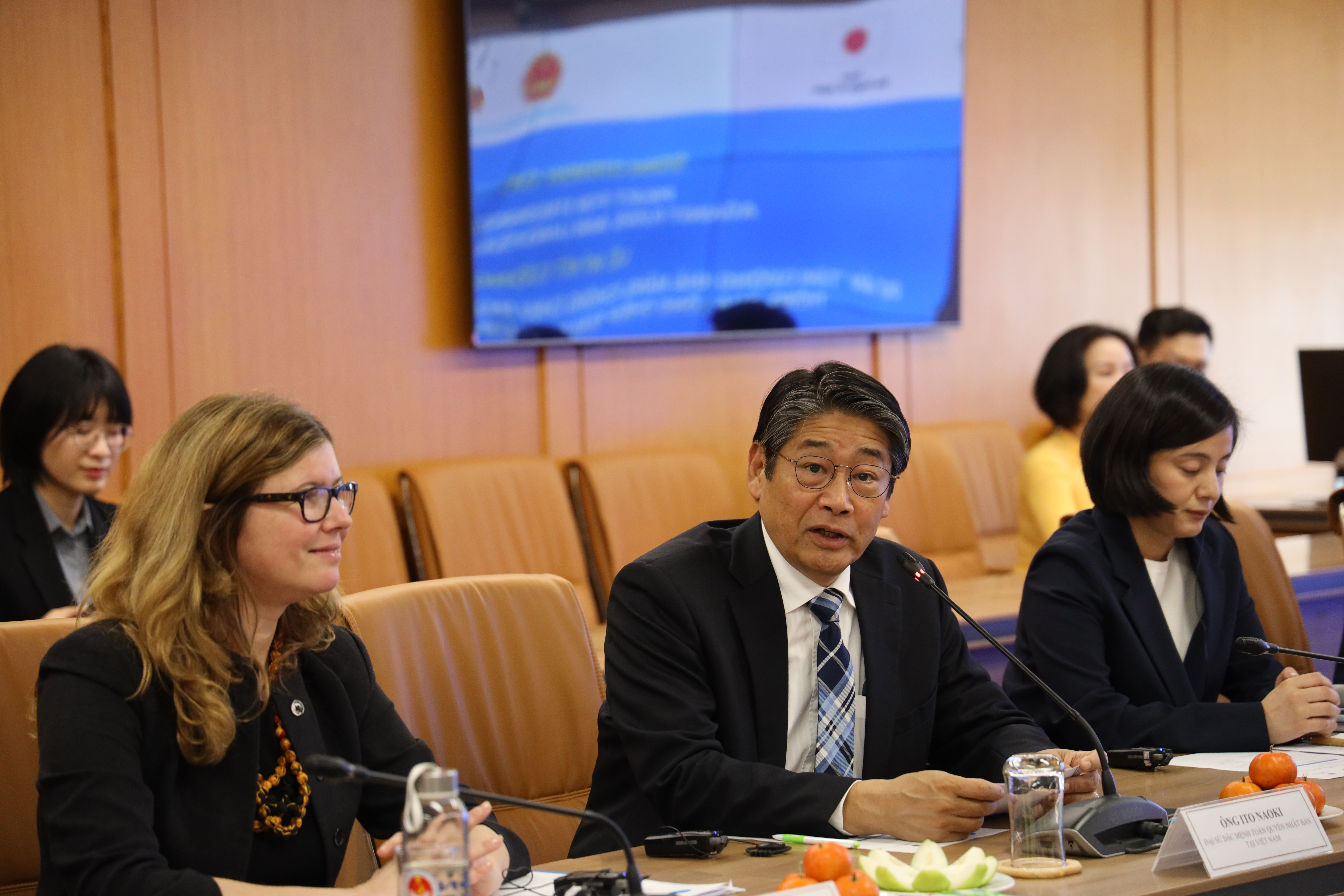
According to the Ambassador, the initiative builds on a successful five-year cooperation project between Japan and UNICEF Viet Nam, which concluded in 2025. Through this partnership, Viet Nam was supported in strengthening policies and coordination mechanisms for disaster risk management, enhancing the resilience of essential social services for children, and reducing the risk of service disruptions caused by climate change-related disasters.
This project aligns with Viet Nam’s commitments under the Sendai Framework for Disaster Risk Reduction (2015–2030), the Paris Agreement on Climate Change, and the Sustainable Development Goals, while also reflecting Japan’s commitment to human security and human dignity. The project is built upon the long-standing partnership between the Government of Japan, UNICEF, and the Government of Viet Nam in advancing disaster risk reduction and strengthening resilience.
