The meeting was co-chaired by Mr. Nguyen Truong Son, Deputy Director General of VDDMA, and Mr. Shin Umezu, Head of UNRCO, with the participation of representatives from the Embassy of Canada in Viet Nam and members of the Disaster Risk Reduction Partnership.
In his opening remarks, Mr. Nguyen Truong Son noted that in 2025, Viet Nam experienced multiple severe disasters causing significant human and economic losses. However, thanks to the strong leadership of the Government and the concerted efforts of the entire political system, recovery and reconstruction have achieved positive results, with important contributions from DRR Partnership members.
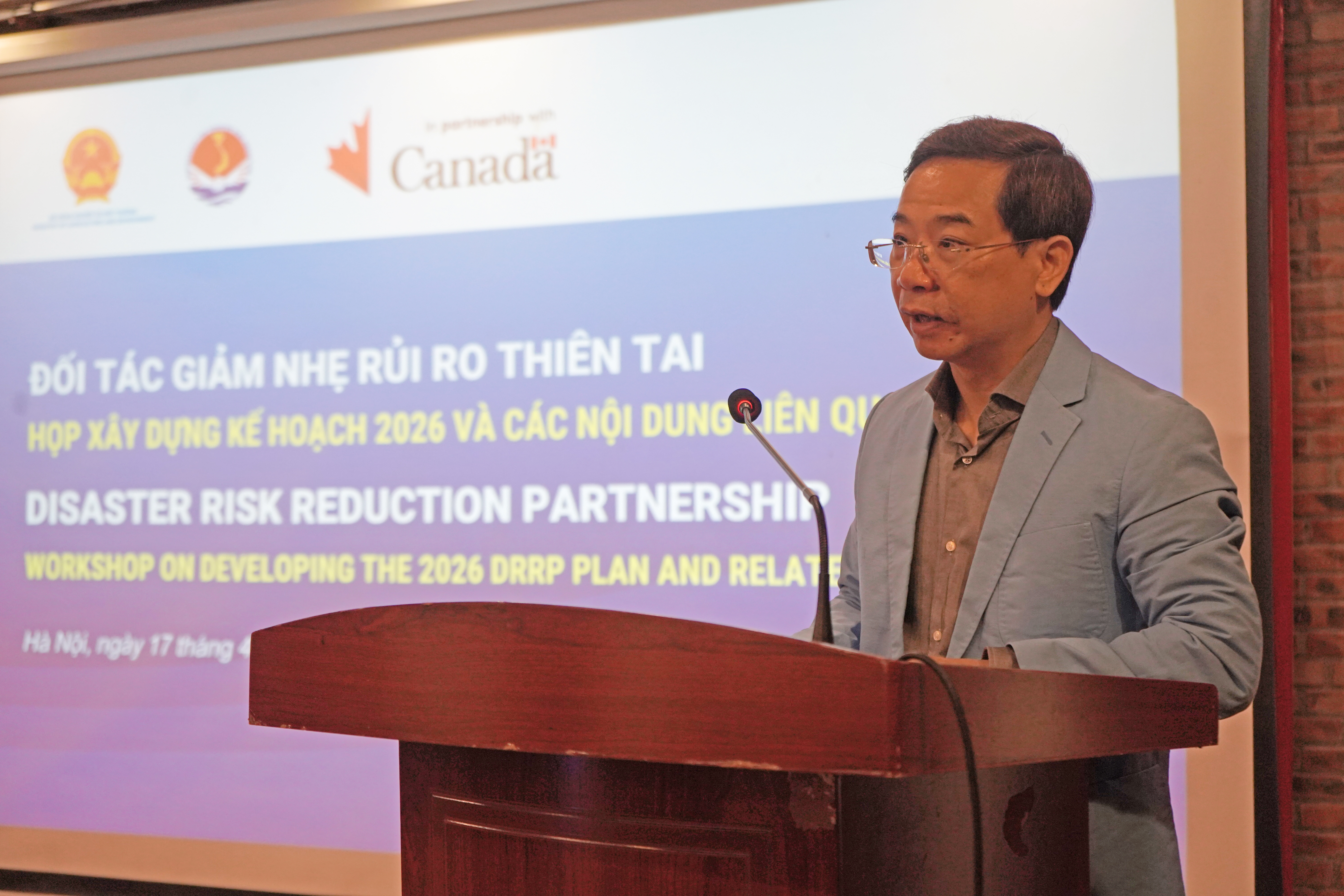
Partnership members effectively coordinated rapid assessment tools and delivered cash assistance and essential relief items to affected communities immediately after disasters. They also advanced risk reduction solutions, including the transfer of SABO dam technology, development of technical materials on gender and safe housing, integration of disaster risk reduction into school systems, and capacity building for local rapid response teams.
Representing the United Nations, Mr. Shin Umezu emphasized the need for a decisive shift from response to risk reduction, preparedness, and anticipatory action. In the context of increasingly frequent and complex disaster risks, he highlighted the importance of investing in resilient infrastructure, shock-responsive social protection, sustainable livelihoods, and improved data systems to better capture the full socio-economic impacts of disasters.
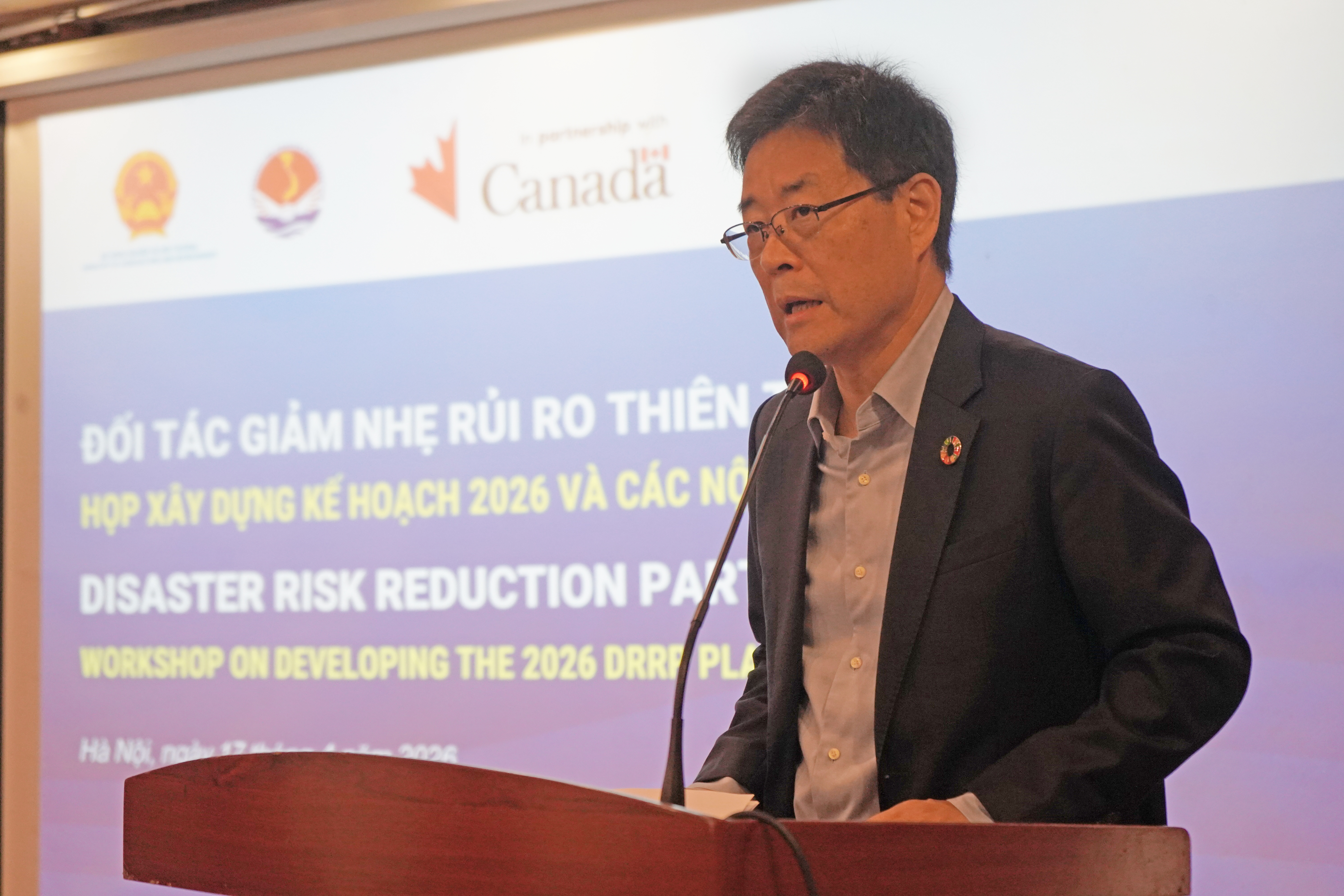
The meeting also provided an opportunity for partners to discuss and finalize the 2026 work plan, focusing on key priorities such as promoting forecast-based early action, strengthening post-disaster assessments, enhancing contingency planning, and improving coordination among stakeholders. Proven models in Viet Nam, including resilient housing and community-based adaptation, were identified for further replication and scaling up.
In addition, participants discussed communication activities, community awareness-raising, development of training materials for local disaster response teams, and the review and alignment of members’ 2026 plans to strengthen cross-sectoral collaboration.
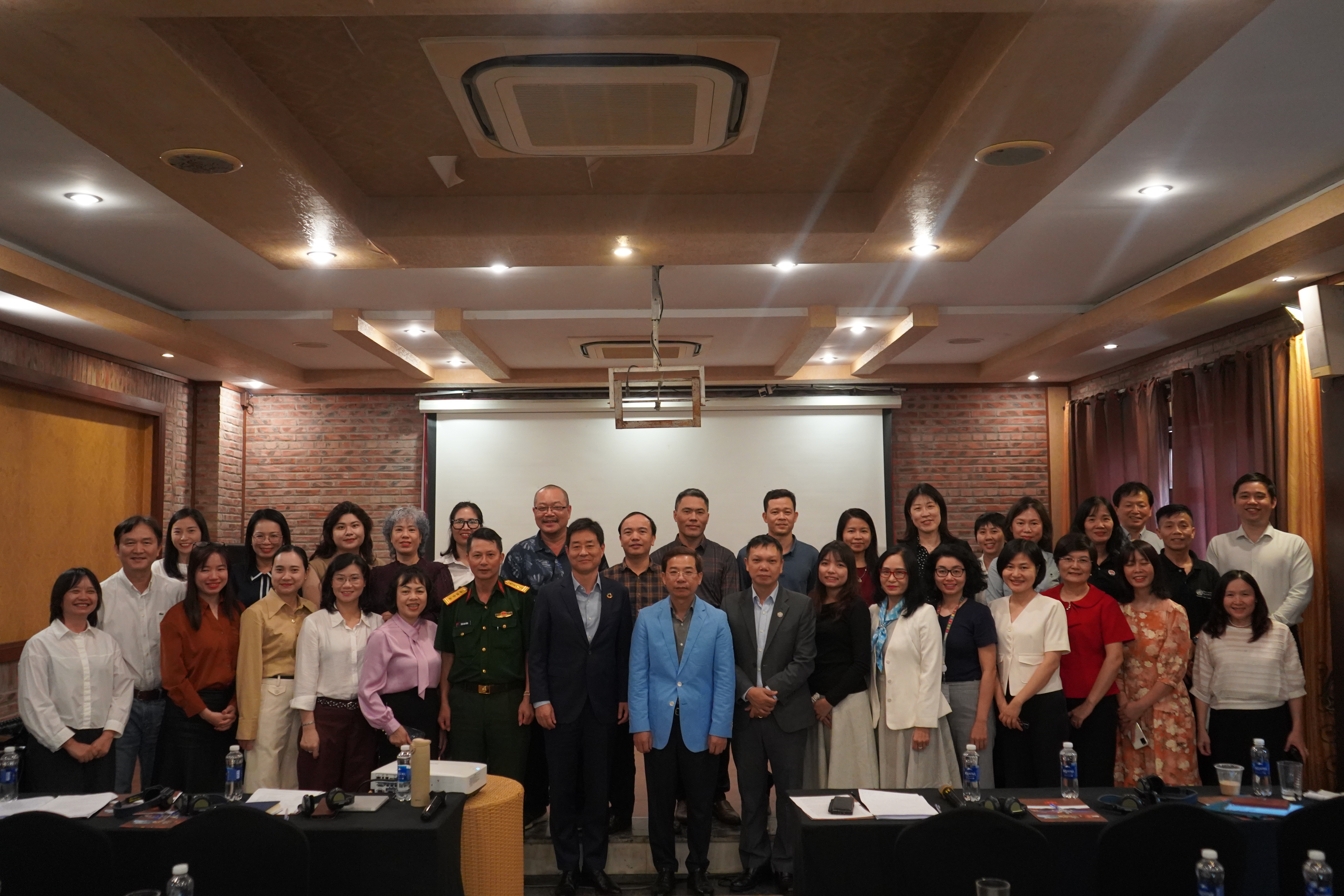
In 2026, the Disaster Risk Reduction Partnership will continue to serve as an effective mechanism for mobilizing and coordinating international resources, sharing knowledge, and supporting Viet Nam in disaster prevention, response, and recovery. Moving forward, DRRP will further enhance cooperation toward acting earlier, investing smarter, and protecting better, thereby reducing losses and safeguarding people’s well-being.
