The event was attended by Deputy Minister of Agriculture and Environment Nguyễn Hoàng Hiệp; Ms. Pauline Tamesis, United Nations Resident Coordinator in Viet Nam; Ms. Silvia Danailov, UNICEF Representative in Viet Nam; Associate Professor Nguyễn Đức Sơn, Secretary of the Party Committee and Rector of Hanoi National University of Education; and representatives of government agencies, international organizations, development partners, teachers and students. The event attracted more than 1,000 participants.
The theme of the 2026 International Day for Disaster Risk Reduction, “Resilience Starts at Home,” highlights the role of every household in proactively identifying risks, preparing for emergencies and strengthening resilience to disasters.
Prevention and preparedness must come first
In his opening remarks, Deputy Minister Nguyễn Hoàng Hiệp emphasized that disasters can strike anywhere and at any time, but the resulting damage is not inevitable. Building a more resilient society requires not only investment in physical infrastructure but also greater public awareness, knowledge and practical skills, starting with individual households, schools and communities.
Highlighting the need for a shift in disaster management, the Deputy Minister stressed that “prevention must come one step ahead, or even several steps ahead.” This means proactively identifying risks, improving forecasting and early warning systems, and taking action before disasters occur, rather than focusing primarily on emergency response and recovery.
Drawing on practical experience, including the Quang Trung Campaign, the Deputy Minister commended coordination among local authorities, the armed forces, communities and international partners. He affirmed that the Ministry of Agriculture and Environment would continue to shift from a disaster response approach to disaster risk governance, with proactive prevention, early warning, science and technology, data and community participation as its foundations.
He also underscored the role of the education sector, teachers and young people in disseminating knowledge, building practical skills and encouraging behavioral change in disaster preparedness. “Every lesson about disasters today can become a life-saving skill tomorrow,” he said.
Engaging students and teachers in disaster risk reduction
In response to the 2026 International Day for Disaster Risk Reduction, the Vietnam Disaster and Dyke Management Authority (VDDMA), in coordination with Hanoi National University of Education, organized a range of communications and educational activities in diverse formats, engaging students and teachers across the country.
A highlight was the “Golden Bell” quiz competition in Ninh Binh Province, which reached more than 3,000 lower secondary school students. The competition provided an interactive platform for students to improve their knowledge and skills in disaster preparedness and risk reduction.
The “Dance Storm – Disaster Preparedness Dance Challenge” conveyed disaster prevention messages through creative artistic expression, reaching more than 19,000 youth union members and students at Hanoi National University of Education.
Meanwhile, the competition on developing and delivering disaster risk reduction lessons received more than 200 submissions from four leading universities specializing in teacher education. The initiative helped develop practical teaching resources to support future teachers in incorporating disaster risk reduction into classroom activities.
Investing in children's safety and resilience
Speaking at the event, Ms. Silvia Danailov, UNICEF Representative in Viet Nam, highlighted that children are increasingly exposed to risks from storms, floods, droughts, heatwaves and other extreme weather events. When disasters strike, children's health and safety, as well as their education and future prospects, can all be affected.
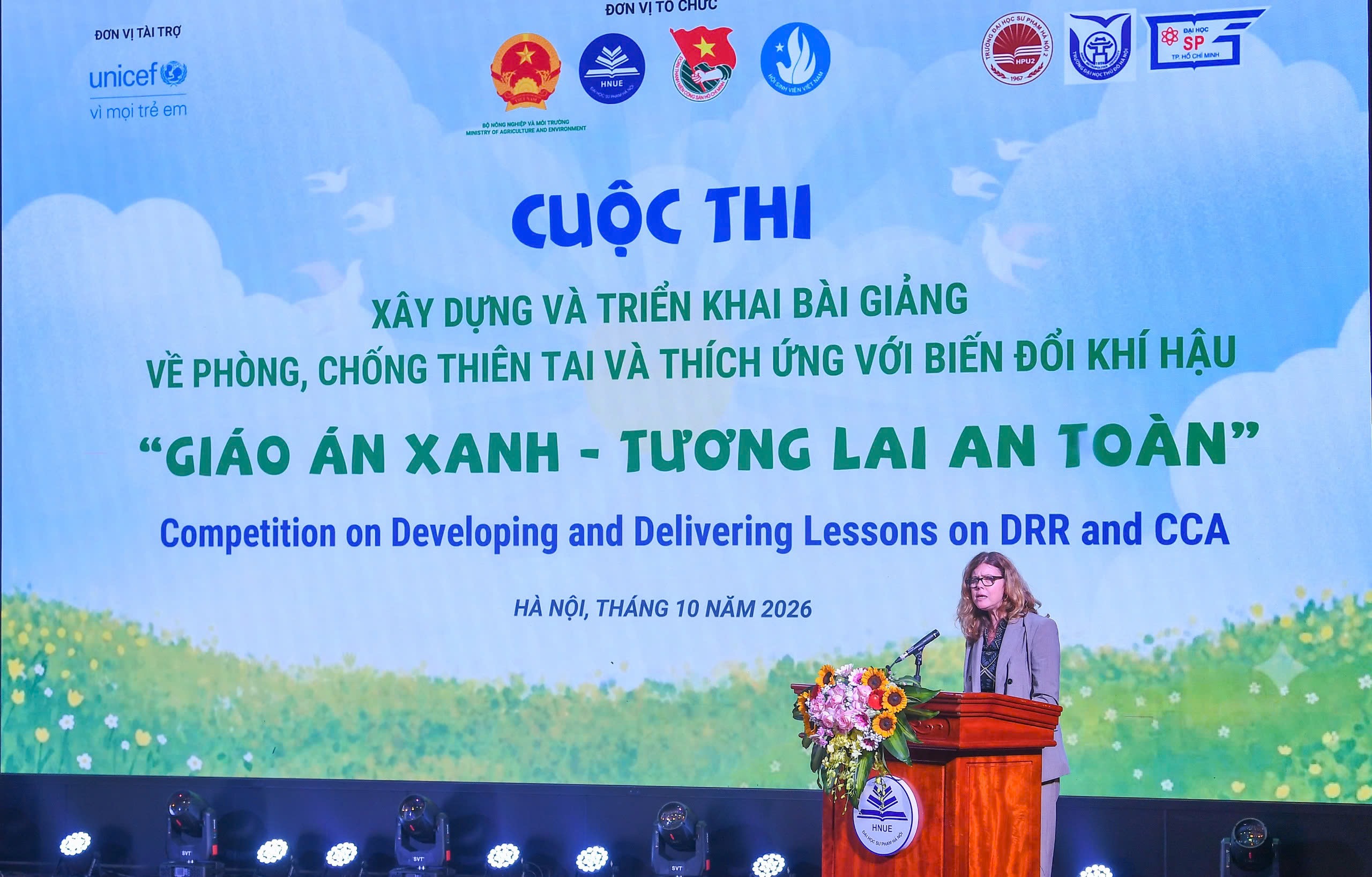
According to the UNICEF Representative, these risks can be reduced through appropriate investment in preparedness, early action and education. She welcomed the initiative to develop and deliver lessons on disaster risk reduction and climate change adaptation, implemented through collaboration between UNICEF and VDDMA, and emphasized that “resilience must start in the classroom.”
She noted that initiatives led by teachers and students represent more than just competition activities; they are investments in the future. They contribute to ensuring that every child has the knowledge needed to stay safe, schools become safer and communities are better equipped to withstand disasters and climate change.
Lessons from disaster response and recovery
During the event, a representative of the Department of Search and Rescue under the Ministry of National Defence, who also serves at the Office of the National Civil Defence Steering Committee, shared practical lessons from disaster response and recovery, particularly the Quang Trung Campaign launched by the Prime Minister in late 2025.

Under the campaign, the military directly supported the construction of 619 new houses and the repair of 363 houses for people in Central Viet Nam affected by storms and floods. The work was completed and handed over ahead of schedule.
Drawing on these experiences, the representative emphasized the importance of the “four-on-the-spot” principle, stronger coordination among response forces, proactive evacuation of people from high-risk areas and ensuring adequate logistical support during disasters.
Post-disaster recovery and housing reconstruction must also ensure construction quality and safety, select building sites appropriate to disaster risks, and help affected households restore living conditions and stabilize their lives. These lessons should continue to inform the development and implementation of civil defence plans at all levels.
Strengthening partnerships for disaster resilience
In her remarks, Ms. Pauline Tamesis, United Nations Resident Coordinator in Viet Nam, commended the cooperation between the Government of Viet Nam, United Nations agencies and partners in disaster risk reduction.
Drawing on experience from the joint response to Typhoon Yagi and recent severe flooding, she highlighted the importance of coordination mechanisms, joint assessment teams and linking international assistance with response efforts led by the Government of Viet Nam.
Against the backdrop of increasingly complex disaster risks associated with climate change, Ms. Tamesis called for three fundamental shifts: from responding to disasters to proactively forecasting and managing risks before they occur; from managing losses and damage to preventing them; and from viewing resilience as a form of post-disaster humanitarian assistance to recognizing it as a core investment in a sustainable future.
She also outlined four priorities for strengthening disaster resilience: translating early warnings into early action; expanding forecast-based early action; integrating resilience into development; and placing people and communities at the center of disaster risk reduction efforts.
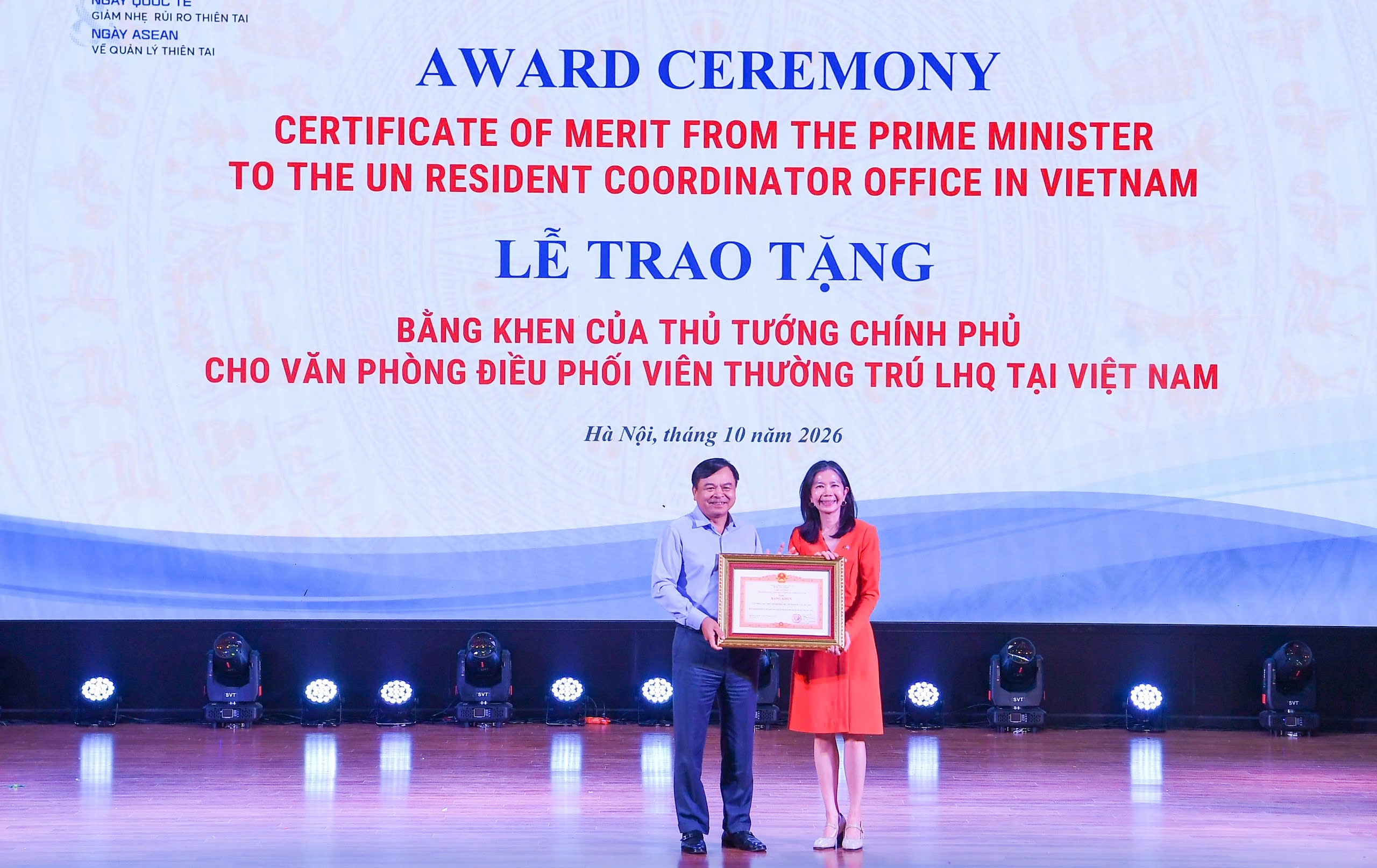
At the event, the Office of the United Nations Resident Coordinator in Viet Nam was awarded a Certificate of Merit from the Prime Minister in recognition of its contributions to disaster risk reduction.
The 2026 rally marking the International Day for Disaster Risk Reduction and ASEAN Day for Disaster Management reaffirmed the importance of cooperation among government agencies, the education sector, international organizations and communities in raising awareness, strengthening preparedness and reducing disaster risks.
The message “Resilience Starts at Home” goes beyond raising awareness. It calls for concrete action in every household, school and community, contributing to a safer, better-prepared and more sustainable Viet Nam in the face of disasters.
