SITUATION OVERVIEW
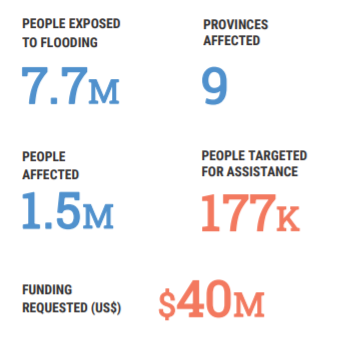
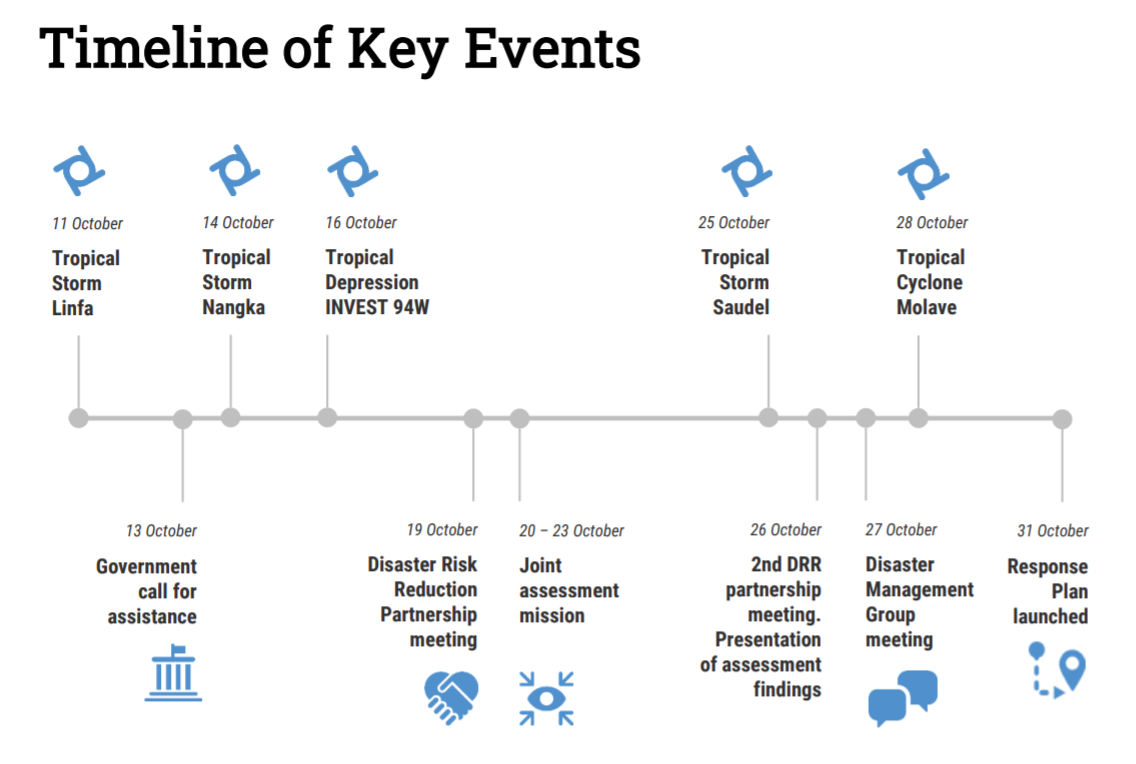
Of those people directly affected by the current disaster, some 753,000 are women and girls, 134,000 are children under five, and 143,000 are over 65 years old. On the morning of 11 October, Tropical Storm Linfa (Storm No. 6) made landfall in Quang Nam and Quang Ngai provinces in central Viet Nam, resulting in 150 to 300 mm of rain. This was followed on 14 October by Tropical Storm Nangka (Storm No. 7) which made landfall in northern Viet Nam, but also brought a further 150 mm of rain to the still flooded provinces of central Viet Nam. On 16 October, tropical depression INVEST 94W in the East Sea weakened into a low-pressure area and made landfall in the central provinces, and was subsequently followed by Tropical Storm Saudel (Storm No. 8) which made landfall in Quang Binh and Quang Tri provinces on 25 October. On 28 October, Tropical Cyclone Molave (Storm No. 9) made landfall in approximately the same area as Tropical Storm Linfa, with up to 700 mm of rain reported in Nghe An and Ha Thinh provinces and up to 400 mm of rain in Quang Binh and Quang Tri provinces. In Quang Ngai province, some 17,000 people were evacuated because of the strong winds and rain. Between 5 and 20 October, VNDMA reported that many areas in central Viet Nam recorded a total rainfall of more than 2,400 mm, and in some locations, flood waters exceeded the previous historical high recorded in 1979 and 1999.
As of 29 October, nine provinces have been affected by the cumulative impacts of the multiple storms including Tropical Cyclone Molave. These are, Ha Tinh, Quang Binh, Quang Nam, Quang Ngai, Quang Tri, Thua Thien Hue, Nghe An, Binh Dinh and Kon Tum provinces, with Ha Tinh, Quang Binh, Quang Ngai, Quang Tri and Thua Thien Hue provinces most severely affected.
Following Tropical Cyclone Molave, more than 88,000 houses and 50 schools had their roofs blown off, the majority in Quang Ngai province, and some 375,000 people were evacuated to evacuation centres. Those in the evacuation centres are amongst the most vulnerable having had their houses damaged or destroyed and having lost key household items in the floods. Many of the evacuation centres are overcrowded, do not have access to sufficient basic facilities such as water and sanitation, and health care, and lack appropriate management needed to prevent the spread of COVID-19 and to mitigate protection risks especially for women and children.
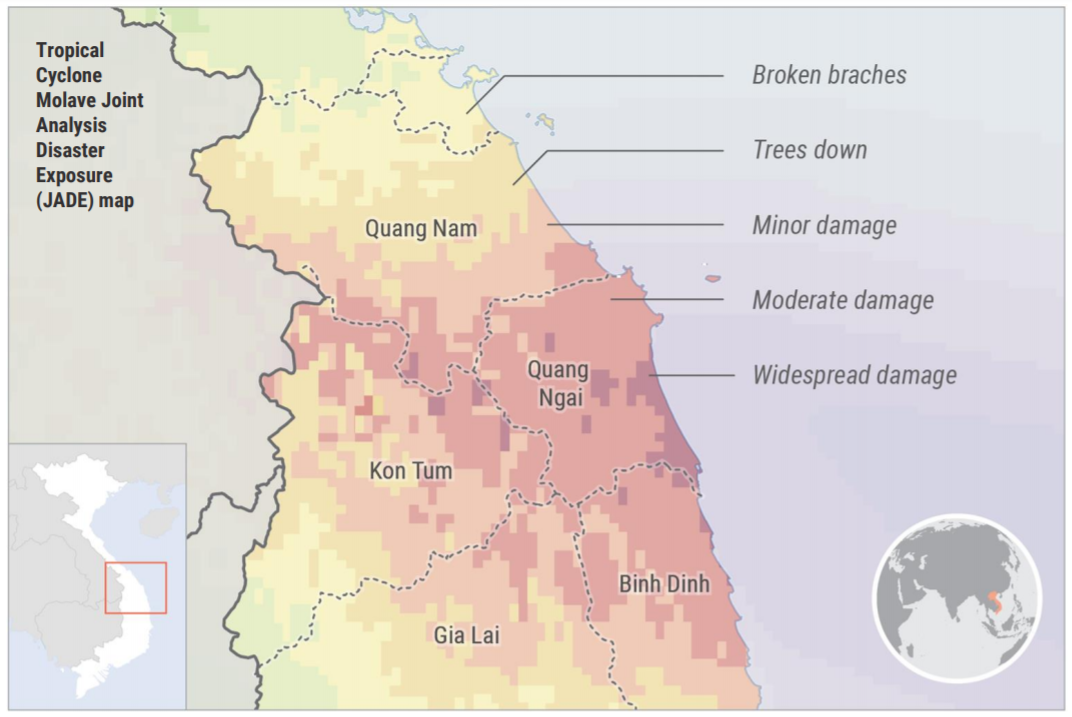
As well as damage to houses, some 30,000 hectares of agricultural land has been damaged (including rice, other crops, and aquatic products) and more than 2 million cattle and poultry have been killed. This is likely to have severe impacts on food security and livelihoods, especially for those people who were already experiencing adverse economic impacts due to COVID19. Further, more than 360 schools have been flooded and damaged, with detrimental impacts on children’s ability to continue accessing education. In addition, more than 78 health centres and hospitals have also been damaged or flooded.
To date, the delivery of assistance has been hampered by extensive damage to public transportation infrastructure. VNDMA reports that more than 165 km of national highway, 140 km of local roads and three bridges have been heavily damaged. Rescue teams are accessing affected areas by boat to deliver relief items and to evacuate vulnerable people, prioritizing children, people with disabilities and elderly people. Communication has also been hampered by the loss of electricity in many affected areas.
The areas most severely affected by flooding are also those same provinces which experienced a second wave of COVID19 cases in July and August. Following the outbreak of the second wave of COVID-19, a further thirty days of lockdown measures were implemented from 28 July to 5 September, with adverse socio-economic impacts for the region which already records higher than national average multidimensional poverty rates. As a consequence of COVID-19 related measures, the most vulnerable people had already had their coping capacities eroded prior to this current disaster and are thus in more acute need of immediate assistance to help them manage the current, compound crisis.
From 20 and 23 October, joint GovernmentUN-NGO assessments were undertaken in Quang Binh, Quang Tri, Thua Thien Hue, Quang Nam, and Quang Ngai provinces. Key findings from the assessments include the need for emergency food assistance for 177,000 of the most vulnerable people, restoration of agricultural land, safe access to clean water and sanitation facilities including in health centres and schools, the provision of dignity kits for women and girls, provision of education supplies and alternative learning solutions to ensure continuity of learning, support for those people evacuated from their homes, repairs for damaged houses, replacement of basic household items, health support especially maternal and child health, risk communication activities, provision of micro nutrients and continuation of nutrition activities to prevent an increase in rates of malnutrition.
Protection has been identified as a key need in this response, including the immediate need to ensure protection and safeguards for women and children currently living in evacuation centres. Partners involved in the development of this plan have also highlighted the need to provide assistance in a gender-responsive manner that addresses the specific needs of women and girls. The Government has requested that all relief activities target the most vulnerable people, including poor, near poor, people living with disabilities, children, femaleheaded households and elderly people, which are the target populations for this response plan.
KEY FIGURES
STRATEGIC OBJECTIVES
i. Deliver immediate, life-saving assistance to those in the most urgent need, in support of the Government response and in line with Government requests for assistance.
ii. Ensure the most vulnerable people, including women and children, elderly people, persons with disabilities, and LGBTIQ persons, are protected against violence and have equal access to humanitarian assistance and services without discrimination
iii. Prevent the outbreak of communicable diseases and effectively monitor risks to the health of the affected population, including the nutrition status of vulnerable people such as pregnant and lactating women and children under five years of age. Deliver assistance in a manner that minimises the risk of COVID-19 for disaster-affected people.
v. Ensure access to multi sectoral assistance and re-establish critical services. Promote the repair of key public service infrastructure in affected provinces, ensure food security, by restoring lost food stock, livestock and livelihoods, ensure access to sustainable drinking water, sanitation facilities and hygiene supplies, housing, replacement of productive assets and household items, and access to basic medical, social and public services to support the affected population transition to recovery and rebuild their lives and livelihoods.
Government-led response
This Response Plan provides an overview of the response by the international community in support of the Government response. The National Steering Committee for Natural Disaster Prevention and Control (NCNDPC) is regularly conducting coordination meetings and has sent missions to the affected provinces to provide guidance and conduct rapid assessments. The Government has mobilized the military and vehicles for search and rescue missions including for those missing at sea and due to landslides, evacuated people at risk or affected by floods, and provided immediate food assistance to flood-affected people.
On 13 October, the Government released a call for emergency relief and support and convened a meeting with Disaster Risk Reduction partners on 19 October to discuss and coordinate international assistance. Initial requests for assistance included food, search and rescue equipment, cash, and water and sanitation assistance. During a meeting of the Disaster Management Group (DMG) on 27 October, the Government further expanded on the request for assistance including the need for shelter repairs, support for evacuation centres, food assistance, livelihoods restoration support especially for those working in the agricultural sector, nutrition assistance, water and sanitation items for households, schools and health centres, emergency education supplies, and psychosocial support.
As of 27 October, $3.5 million have been provided in support of the Government-led response. In addition, international organizations, including UN agencies, NGOs and the Red Cross are providing critical relief items including home repair kits, kitchen sets, food, household and relief kits, 600,000 Aquatabs and 120,000 water purification packets and multi purpose cash. The AHA Centre is mobilizing the Disaster Emergency Logistics System for ASEAN (DELSA) regional stockpile in Subang, Malaysia, including 1,000 home repair kits and 1,300 kitchen sets delivered to Thua Thien Hue and Quang Tri provinces.
Response Strategy
This Response Plan aims to target the needs of the most vulnerable 177,000 floodaffected people, based on an analysis of those individuals with pre-existing vulnerabilities prior to the disaster, according to the multidimensional poverty survey of 2019 by Ministry of Labor, Invalids and Social Affairs (MOLISA). Of those people targeted for assistance, some 89,000 are women and girls, 16,000 are children under five, and 17,000 are over 65 years old. The response plan will ensure that the acute needs of the most vulnerable households are met, including women, older persons, people with disabilities and children. Interventions will be gender sensitised, including access to safe evacuation conditions that adequately address the needs of women and girls, while enhancing preparedness for future disasters.
Given the ongoing COVID-19 pandemic, specific considerations will be given to ensure social distancing and other Government COVID-prevention measures during the implementation of relief activities, to prevent potential spread of COVID-19. The provision of unconditional cash transfers/multipurpose cash grants, will take into consideration specific needs, protection of the most vulnerable groups, including women, children, the elderly, people with disabilities, and ethnic minorities while also applying Guidance for Cash and Voucher Assistance (CVA) for COVID-19.
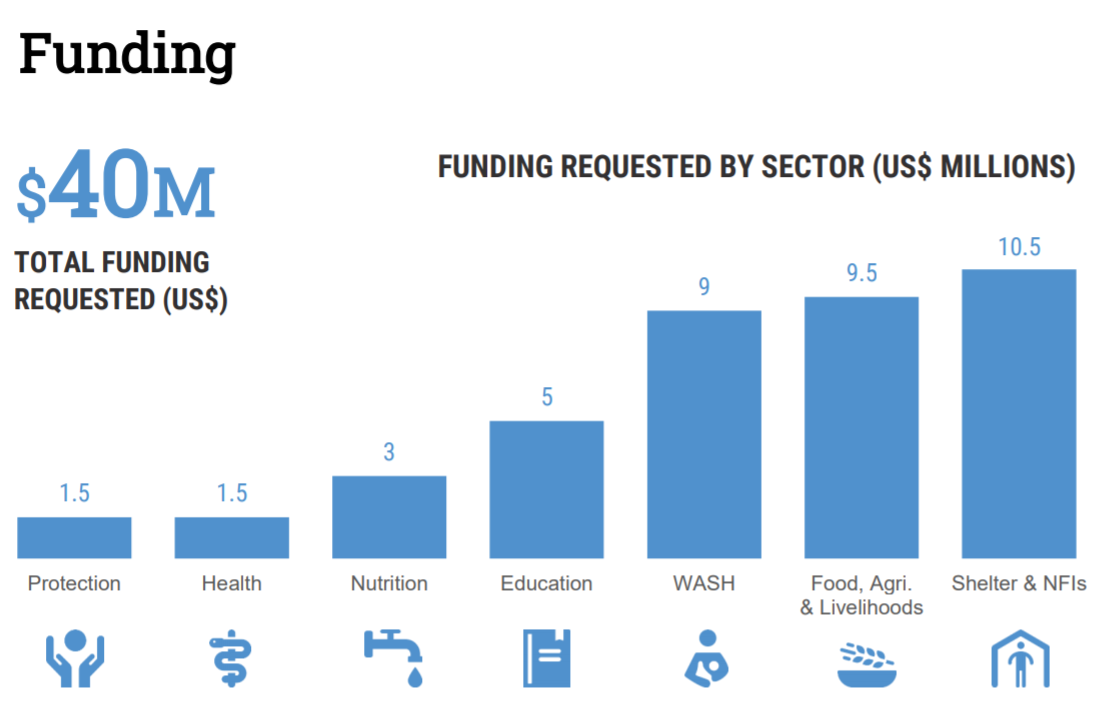
The Viet Nam Flood Response Plan 2020 has been developed by the Disaster Management Group (DMG) and Sectors in Viet Nam in consultation with the Government. It aims to identify those critical response priorities to be covered by UN agencies, NGOs and the Red Cross in order to augment the wider Government response. The Response Plan will cover a period of six months and will consider both the immediate humanitarian needs and early recovery activities, which are integrated through all Sector plans. Sectors involved in the plan have worked in close coordination with each other to ensure that priority activities in this plan have the most significant impact on the lives of the most vulnerable people.
The response will ensure that community members in the affected areas can access information on humanitarian services, feedback to aid agencies (including the attitudes of the responders) in a timely manner and their voices are used to inform decisions. The response will utilize the existing inter-agency community engagement mechanisms that have been established for the COVID-19 operations led by WHO under Risk Communication and Community Engagement coordination group. Aid agencies will adjust the communication and engagement activities based on the channels used and trusted by the communities including vulnerable sectors. Community needs and preferences on aid in this response will be regularly monitored through a simple information management system and corrective actions are addressed as appropriate.
Response by Sector
Sector overview (needs):
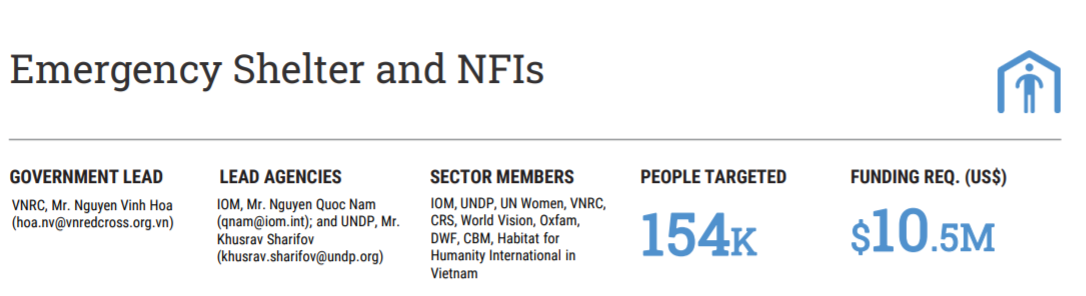
According to the Government, almost 378,000 houses have been flooded and damaged by strong winds during TC Molave, with at least 300,000 households evacuated to shelters, with relatives or in makeshift and unsafe accommodation. The current sites where people have been evacuated do not meet basic needs, including adequate access to water and sanitation facilities.
Households classified as poor and near poor even before the successive floods and storms lack the resources to buy materials to repair their homes. COVID-19 had already significantly impacted the income and food security of vulnerable households, especially the current flood-affected provinces which have just undergone strict social distancing due to the second wave of the virus. This has significantly reduced their capacity to cope with the impacts of the multiple storms and floods.
Many evacuated households in the flood-impacted regions have returned to their homes and begun to assess damage, and the VNDMA is working closely with provincial authorities to regularly provide updates on shelter needs to better and more efficiently plan immediate relief and early recovery actions. There is an urgent need to increase further support for housing rehabilitation and reconstruction, as well as to prevent further escalation of humanitarian needs as additional storms and typhoons are expected to hit the region.
Key immediate shelter needs include: ensuring evacuation sites are safe, by making improvements such as providing tarpaulin and tents to ensure adequate space, creating or maintaining drainage, and safe and equal access to appropriate humanitarian assistance according to age, gender, and other factors, such as disability; ensuring adequate housing for affected people (especially women and girls) before other disasters occur, and well ahead of the upcoming winter; cash for work for poor, near-poor women and men to support public works such as rubble removal, shelter repair, reconstruction of public facilities, transport bricks or construction materials, evacuation site support; and access to gender responsive non-food items, including blankets, mosquito nets and utensils.
Priority Response Activities:
The Shelter Sector response will ensure that the acute needs of the most vulnerable households are met, including women and girls, older persons, people with disabilities and children. The interventions will address issues around gender-based violence, including access to safe evacuation conditions (adequately addressing the needs of women and girls), safe housing, while enhancing preparedness for future natural hazards and climate extremes. Specific considerations will be given to ensure social distancing and other Government COVID-prevention measures.
Phase I – immediate activities
- Address the gaps in the evacuation facilities noted above to ensure adequate conditions and safe spaces for vulnerable groups, including women and girls.
- Provide urgently household kits, NFI, shelter kits, water purification tablets, food kits for the most vulnerable households.
- Repair houses for the extremely vulnerable households including the elderly, female headed, disability households unable to retrofit / repair their damaged houses through unconditional cash grants, voucher and technical shelter assistance, based on community consultations with both men and women from different vulnerable groups.
- Provide gender-responsive household NFI kits to the most affected and remote households.
- Outreach to especially impacted groups, including families with young children, the elderly, and people with disabilities to ensure that they can access and utilize shelter assistance.
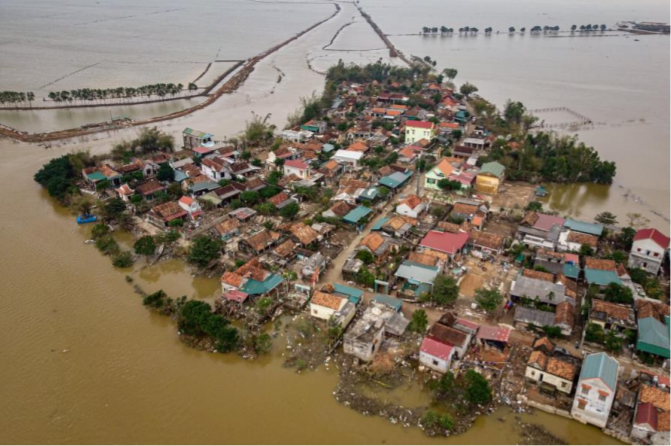
An aerial picture shows houses destroyed and submerged in flood waters caused by typhoons in An Thuy Commune, Le Thuy District, Quang Binh Province, Vietnam on October 27, 2020 Photo: UNICEF/Linh Pham
Phase II – transition to early recovery
- Provide facilities and equipment to support evacuated population (evacuation sites), including measures to ensure safety of women and girls.
- Provide information and referral services for women at risk of gender-based violence in evacuation sites.
- Conduct immediate trainings (before the repairs take place) for male and female staff, local men and women, and male and female construction workers on floods and storms resilient housing and repair techniques to strengthen the resilience of affected communities to cope with and recover from the impacts of the floods and of future storms and floods.
- Provide urgent cash-for-work or unconditional cash for poor, near-poor women and men to work in public works to earn cash (activities include rubble removal, shelter repair, reconstruction of public facilities, transport bricks or construction materials, evacuation site support).
- Rebuild houses for the poor, near-poor households, whose houses were totally destroyed or swept away
Sector overview (needs):
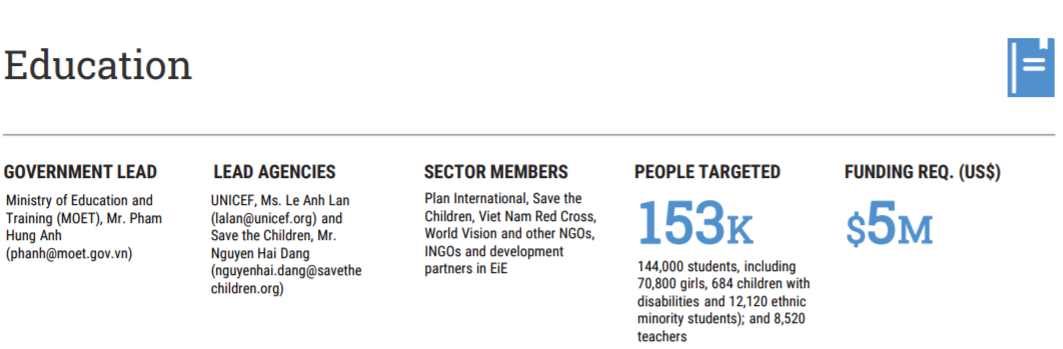
Following the floods, at least 360 schools have been flooded and have suffered varying degrees of damage including to buildings, equipment and loss of learning materials. This is hampering children’s ability to continue their learning, in a safe environment. There is an urgent need to ensure continuity of learning including: providing alternative learning solutions reaching every student such as distance learning (TV, Radio, Online) when schools are closed, when/wherever possible; ensuring a safe learning environment in which physical safety and psycho-social wellbeing of students are ensured and supported; and equipping children with knowledge and skills on handwashing, nutrition, child protection, disaster adaptation and psychosocial support and well-being.
Priority Response Activities:
Phase I - immediate activities
- Distribution of emergency education supplies including the provision of hygiene supplies (soap and/or hand sanitizers), life vests or specialized backpacks, education kits and possible devices to enable online learning for all school levels in the most affected communes, paying attention to the needs of boys and girls, especially ethnic minorities, children with disabilities, and other vulnerable sub-groups.
- Support the assessment on safe learning infrastructure and facilities and/or rehabilitation and/or reconstruction of school facilities, support essential school supplies for teaching and learning and the roll-out and implementation of “Safe Back to School Protocol” with a focus on a safe learning environment & commute to and from school, including physical accessibility for children with disabilities.
- Ensure the continued learning of affected students through the provision of alternative learning modalities including distance and online learning opportunities when/where applicable.
- Disseminate child-friendly communication messages on hazards, drowning and injury prevention, clean water and hygiene including handwashing, nutrition, child protection, , psychosocial support and well-being, including in ethnic minority languages and sign language, reaching the most vulnerable children and families.
- Closely coordinate with health sector to identify and support students and teachers regarding treatment of water based infectious diseases as well as to ensure clean drinking water available at schools.
- Support the monitoring, recording and reporting of psychosocial and mental health status of students and teachers and ensure that students and caregivers are provided with immediate psycho-social support in schools.
- Provision of unconditional cash transfers, multipurpose cash grants to vulnerable households, taking specific needs and protection into consideration.
Phase II – transition to early recovery
- Strengthen the capacity of the education system on more effective preparedness and response interventions, and more attention to narrow the digital divide for the most marginalized and vulnerable children.
- Update hazard maps at provincial, district and commune levels and take into account student exposure to hazards along commute routes and locations of (satellite) schools.
- Raise awareness and conduct skills trainings to build capacities for children on what they should and/or shouldn’t do before, during and after disasters to prevent injuries and drowning. Ensure promotion and application of COVID-19 preventive methods (e.g. handwashing, maintaining a safe distance and face mask-wearing)
- Improve early warning systems that are relevant also for children with disabilities and ethnic minority children to provide real time information at the local levels to inform localized decision making and avoid unnecessary disruption in education services in unaffected areas.
- Ensure the continued learning of affected students through supporting the Ministry of Education and Training (MOET) in the establishment of safe temporary child-friendly and gender-responsive learning spaces in affected communes and districts where school facilities cannot be used and support the provision of distance & online learning opportunities where/when possible.
- Mobilise available psycho-social support for teachers and students, as well as their family members, in the temporary made available learning spaces.
- Strengthen support for follow-up measures regarding school drop-out cases to ensure continued education and quality learning, paying attention to gender and protection issues.
- Intensify of school health services to ensure the physical and psychosocial well-being of students and teachers.
- Provide unconditional cash transfers, multipurpose cash grants with taking specific needs and protection into consideration.
Sector overview (needs):
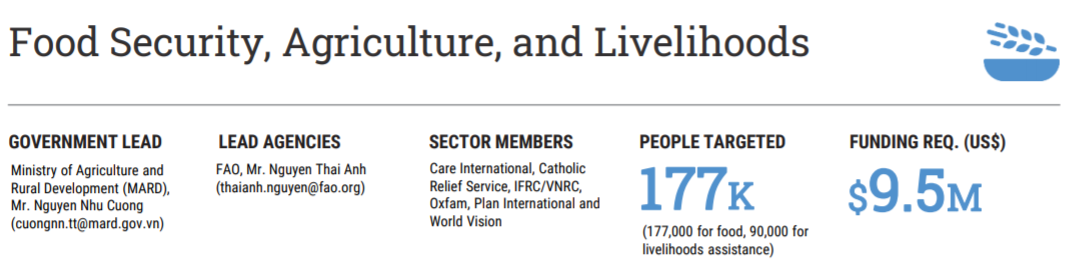
As a result of the storms and floods, one million people have had their livelihoods severely impacted; of these, 177,000 of the most vulnerable people require food assistance and 90,000 people are in need of assistance to restore their livelihoods, as over 30,000 hectares of agriculture land (mainly cash crop and aquaculture) have been damaged and over 2 million heads of livestock have been killed. It is estimated that 90 metric tons of food stocks and seeds have been lost due to the floods, and the most vulnerable, flood-affected families are mainly relying on in-kind food aid from government and individual/ private sector, which is covering approximately 10-20 per cent of their food requirements. As a result, affected vulnerable households have begun employing negative coping strategies by reducing meals, saving food for children or resorting to less nutritious food.
Damage to agriculture land will require investments to resume the crop and aquaculture production in coming the two to four months. Over 70 per cent of the population in affected areas is reliant on self-subsistence agriculture to provide for their daily needs. An estimated 90,000 people are facing a shortage of resources and productive assets necessary to restore livelihood activities. There is therefore an urgent need to support the early recovery of agriculture production for smallholder farmers, as planting of new crops will start in two months. Livestock production, mostly cattle (cow, buffaloes and pigs) and poultry (chickens and ducks), constitutes an additional income and food source for smallholder farmers. The majority of livestock production is conducted by smallholder farmers who own around 40 per cent of cattle and 75 per cent of poultry. Recovery of livestock production will help improve both livelihood and food security of vulnerable households, preventing them from falling into deeper levels of poverty.
Priority Response Activities:
Phase I - immediate activities
- Provision of food and cooking stoves, taking into consideration gender-related needs.
- Distribution of fodder and drinking water for livestock.
- Provision of shelter for livestock to protect animals against the weather and exposure to diseases.
- Rapid needs market study to assess market functionality and the availability of necessary goods.
- Provision of unconditional cash transfers/multipurpose cash grants, taking into consideration specific needs, protection of the most vulnerable groups, including women, children, the elderly, people with disabilities, and ethnic minorities and applying Guidance for Cash and Voucher Assistance (CVA) for COVID-19.
Phase II – transition to early recovery
- Detailed agriculture and livelihood assessment.
- Provision of unconditional cash/ multipurpose cash grants and agricultural input vouchers/cash for work, taking into consideration specific needs of the most vulnerable groups, including women, children, the elderly, people with disabilities, and ethnic minorities.
- Provision of agricultural inputs (fast growing seeds, fertilizers, tools) to restart livelihoods and boost the local economy, taking into consideration gender-related needs.
- Provision of fishing gears, nets and other fishing tools.
- Rehabilitation of rural assets and small irrigation infrastructure.
- Livestock vaccination and de-worming activities.
Sector overview (needs):
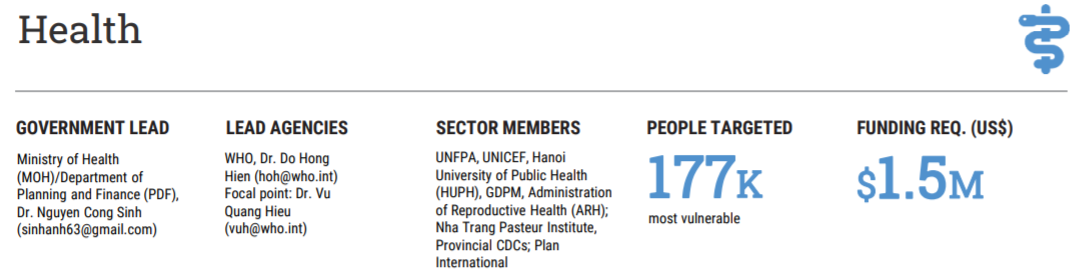
According to the findings of the Joint Assessment, at least 61 commune health stations and 17 hospitals have been damaged as a result of the floods, with further assessments still ongoing, this number is likely to rise. This is limiting the ability of affected health stations and hospitals to function and disrupting access to essential and emergency health care, including safe deliveries; reproductive health services; first aid for injured people; continuation for immunization services; essential health care for vulnerable groups such as elderly people and people with disabilities; and referral systems.
Damage to water and sanitation systems and facilities, a lack of safe water especially in evacuation sites, and standing water and debris from the floods pose public health threats and are increasing the risk of water-borne disease outbreaks, dengue, skin disease, eye infection, and diphtheria due to the ongoing outbreak in Quang Nam and Quang Tri.
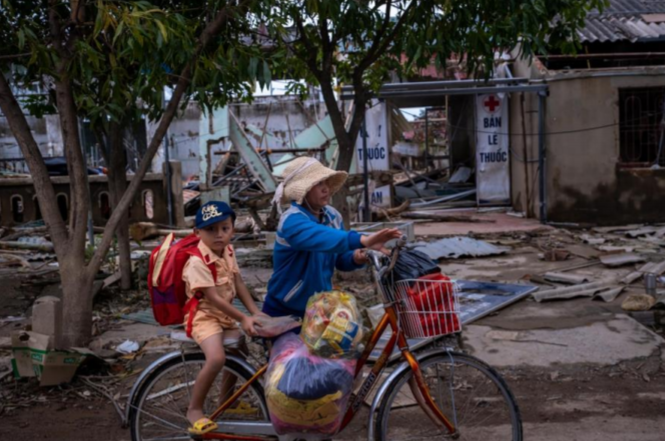 A woman carries her son on bicycle with goods received from donors in An Thuy Commune, Le Thuy District, Quang Binh Province, Vietnam on October 26, 2020 Photo: UNICEF/Linh Pham
The COVID-19 outbreak is well controlled in Viet Nam. As of 29 October, Viet Nam has not reported any community transmission cases of COVID-19 for two months, however, the situation remains volatile. The lesson learned from the second wave in July and August, suggests that the absence of reports of new community transmission cases, does not indicate the absence of virus transmission. In the context of the ongoing disaster, with the local health care system damaged, and local authorities and affected population focused on the flood response, maintaining prevention measures to COVID-19 must also be prioritised. The risk to COVID19 in the flood-affected area is higher than other areas of the country, and if further cases are reported they will occur in a context where the capacity of the local health and local authorities is limited due to the impact of the floods. Therefore, besides the response to flood, it will be essential to continue measures to prevent COVID-19, including strengthening the capacity of the local health system, and implementing infection and prevention measures for the affected population such as hand-washing hand and mask wearing.
Priority Response Activities:
Phase I - immediate activities
- Support damaged health stations and hospitals to continue functioning by providing essential medicines; cold box for immunizations; Minimum Service Package (MSP) for reproductive health kits; electric generators for commune health stations.
- Training for emergency medical teams (EMT) and local health authorities to provide first aid to injured people and strengthen emergency health services in affected areas.
- Provide essential medicines, cold box for immunizations; essential medical equipment for maternal health services, electric generators for commune health station s (CHS), and others.
- Provide immediate maternal healthcare outreach and services in floodaffected areas including mobile teams to deliver maternal and reproductive health care and services to women, girls and those who are affected by floods.
- Enhance disease surveillance and risk assessment of potential disease outbreaks, including COVID-19 in the affected areas.
- Implement communication campaign to raise public awareness of key health concerns, including COVID-19 during current disaster.
- Provide water filters, chemicals for water purification to commune health stations affected by the floods.
Phase II – transition to early recovery
- Continue to support local health authorities with planning for prevention and response to natural disasters for health.
- Expand training to include paramedics and EMTs.
- Strengthen referral system’s capacity.
- Expand campaign of immunization to address measles, diarrhoea, influenza.
- Ensure capacity of local first aid at local level with focus on reproductive health.
- Advocate to upgrade or reallocate health care facilities or redesign infrastructure of health care facilities/ hospitals located in vulnerable areas to floods and landslides.
- Enhance surveillance and risk assessment of outbreak prone diseases in all affected areas for early detection and response.
- Increase awareness on public health risks and prevention associated with the typhoon and as well as prevention, including community mobilization and communication for behavioural change.
- Strengthening the capacity of local health facilities to treat and support of patients affected by the floods, including longer-term associated impacts (such as mental health or psychological disorders.)
- Strengthen communication on IPC measures in prevention for COVID19.
Sector overview (needs):
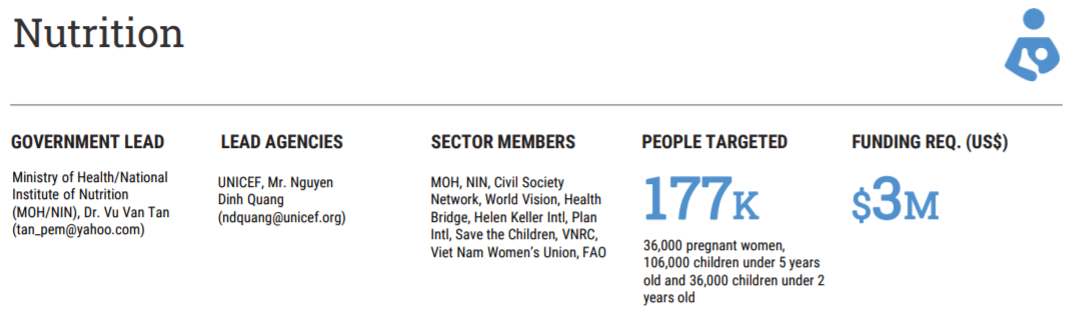
As a result of the floods, many of the most vulnerable families have had their food supplies destroyed, their agricultural land and livestock swept away, and their sources of livelihood lost. Consequently, the most vulnerable people, especially children under five and pregnant and breastfeeding women, will be placed at increased risk of undernutrition and malnutrition.
There is therefore the need to ensure pregnant women and vulnerable children under five years old have access to essential nutritional supplements (multiple micro-nutrients) to counter any inadequate dietary intake. Children aged under five years must also be screened for the early detection of severe wasting and other forms of life-threatening acute malnutrition and referred, as appropriate, for treatment services to prevent long-term impacts to their health and development.
Children aged under five years suffering from severe wasting and other forms of life-threatening acute malnutrition in affected areas must have access to facility-based care and services that provide effective treatment to reduce morbidity and mortality. There is also the need for regular monitoring through routine services of nutrition disorders, focusing on pregnant women, children under two years old.
Priority Response Activities:
Phase I - immediate activities
- Monitor the nutrition situation for women, children and other vulnerable persons particularly families with children affected by COVID-19 supported through the national nutrition programme network including a specific nutrition survey to assess further details impacts of the disaster for response actions needed
- Provide rapid training for deployment of responsible health staff to manage the specific emergency nutrition interventions in the affected provinces
- Deliver critical messages on nutrition and food hygiene & safety within the affected population, considering both gender and diversity issues. Ensure promotion and application of COVID-19 preventive methods (e.g. handwashing, maintaining a safe distance and face maskwearing)
- Deliver essential nutrition supplements (i.e. vitamin A high-dose capsules for under 5 children, or multiple micro-nutrients for pregnant women (by dose).
- Monitor and manage the donations of breastmilk substitutes and support Infant and Young Child Feeding (IYCF) counselling.
Phase II – transition to early recovery
- Provide critical messages on nutrition and materials explaining how to follow Infant and Young Children Feeding practices among breastfeeding women, parents and child caregivers.
- Provide necessary guidance and technical support to resume regular and essential nutrition services at commune and district level and support of a system-wide recovery to a normalized routine of nutrition services in affected communities.
- Provide nutrition supplements, especially micro-nutrients for targeted pregnant and lactating women, children with disability, priority given to families with children affected by COVID-19.
- Detect child severe acute malnutrition and given timely treatment in the most affected population. Conduct awareness campaigns on regular screenings for the detection of severe acute malnutrition (SAM) and moderate acute malnutrition (MAM) for a timely-triggered response.
- Monitor and manage the donations of breastmilk substitutes and support Infant and Young Child Feeding (IYCF) counselling.
- Monitor the intervention coverage and technical compliances of the intervention.
Sector overview (needs):
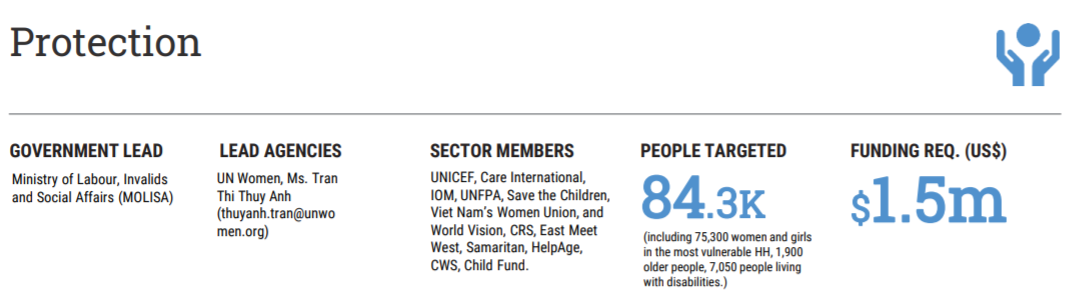
The people most severely affected by the current disaster are those with preexisting vulnerabilities, including the poor, near poor, single- or female- headed households, children, people living with disabilities and elderly people, many of whom do not have sufficient coping capacities to deal with the current crisis and the loss or damage to their homes, food and other key items.
Lack of safety and security at the evacuation sites has been identified as a key protection need, with women and children at increased risk of violence, harassment and abuse. Many evacuation sites are public places (community houses or commune People’s Committee offices) or neighbour's houses, and these locations are crowded, often do not have sleeping areas separated by gender, have no electricity, limited access to basic services such as water and sanitation and basic health care with serious risks for the health of those in the evacuation sites.
Viet Nam already had a high rate of gender-based violence (GBV) prior to this disaster. A national survey in 2019 showed that 63 per cent of women had experienced violence by a partner in their lifetime. In times of crisis, these risks are increased. Gender-based violence encompasses not only sexual violence and sexual harassment, but all forms of violence, including sexual, physical, psychological and economic violence. In addition, according to the 2014 Multi-Indicator Cluster Survey, 68% of children aged 1-14 years were subjected to at least one form of psychosocial or physical punishment.
The current disaster is also likely to have had a disproportionate impact on the incomes and livelihoods of the most vulnerable women, who often work in the informal sector and rely on daily wages. Many of these women had already suffered the economic impacts of COVID-19, and so had limited coping capacities prior to this disaster and are now in urgent need of assistance.
Children affected by the disaster have been exposed to severe stress, anxiety and trauma due to major disruptions in their daily lives, experiencing the loss of family members and friends, closure of their schools, and often experiencing the trauma of the floods first-hand. In Quang Ngai for example, children have reported that they have experienced trauma after hearing or experiencing the loss of classmates. Although there have not been reported cases of child abuse to date, many schools have been closed for extended periods of time, leaving children more exposed to domestic violence and at risk of neglect, exploitation and abuse..
Children, especially girls, in evacuation sites as well as those who are without parental care or who experienced loss of their parents and caregivers during the disaster are particularly exposed to violence, institutionalization, sexual abuse and exploitation and trafficking. The loss of families’ houses and livelihood will also increase the risk of child labour.
Priority Response Activities:
Phase I - immediate activities
- Provision of multipurpose cash for the most vulnerable people affected by the floods.
- Provide mental health and psychosocial support (MHPSS) for children, older people, people with disabilities and women by deploying appropriately trained staff to affected areas and delivering additional training to local staff to provide primary mental health care.
- Support local Department of Labour, Invalids and Social Affairs (DOLISA) to implement case management for women, older people, people with disabilities and children affected or at risk of violence, harassment and abuse.
- Conduct family tracking and reunification of families, particularly in areas where children and other vulnerable people have been separated from their primary caregivers, and to provide alternative care arrangements to children without parental care
- Develop and distribute a brief guidance on protection from child abuse and violence, gender-based violence, injuries and drowning along with lifesaving information targeting front-line workers for their effective supervision and arrangements in evacuation sites, including a set of messages on personal safety to be disseminated both through loudspeakers, and online as soon as connectivity is restored
- Disseminate key communication messages and information on violence against children and gender-based violence in emergencies, and hotlines on violence against children and gender-based violence supporting services for the most vulnerable people including children, women, older people, people with disabilities in community, preparation of Standard Operating Procedures (SOPs) for violence against children and genderbased violence referral and reporting pathways.
- Provision of technical support to different sectors and cross-sectoral response on gender and protection mainstreaming across the humanitarian response cycle, including assessment, planning, implementation and monitoring.
- Work with Shelter sector to put in place measures for safety of the most vulnerable people including children, women, older people and people with disabilities in evacuation sites (commune office buildings, community houses) such as setting up separate sleeping areas by gender, separate toilets and bathrooms, and provide information and services for women at risk of gender-based violence.
Phase II – transition to early recovery
- Provide dignity kits to women and girls together with information on gender-based violence in emergencies and available supporting services to survivors.
- Send out SMS messages to women and girls on gender-based violence in emergencies and available supporting services to survivors.
- Provision of technical support to different sectors and cross-sectoral response on gender and protection mainstreaming ensuring the integration of protection principles across emergency response.
- Cash for work programme of the most vulnerable people and women.
- Continue awareness raising activities and messaging on prevention of child abuse and violence, gender-based violence and prevention of injuries and drowning.
- Provision of mental health and psycho-social support in the affected areas.
- Provision of clinical care, case management and legal counselling to violence against children/Gender-Based Violence survivors
- Provision of relevant social assistance and referral to other social services to minimize child labour to affected families.
- Continuous monitoring of gender and protection considerations in the overall response activities of other sectors and responding to these with appropriate measures for improvement.
- Provide support for MOLISA to develop child protection indicators in emergencies and capacity- building for data collection and report on these indicators in emergencies, especially for disaster prone provinces.
Sector overview (needs):
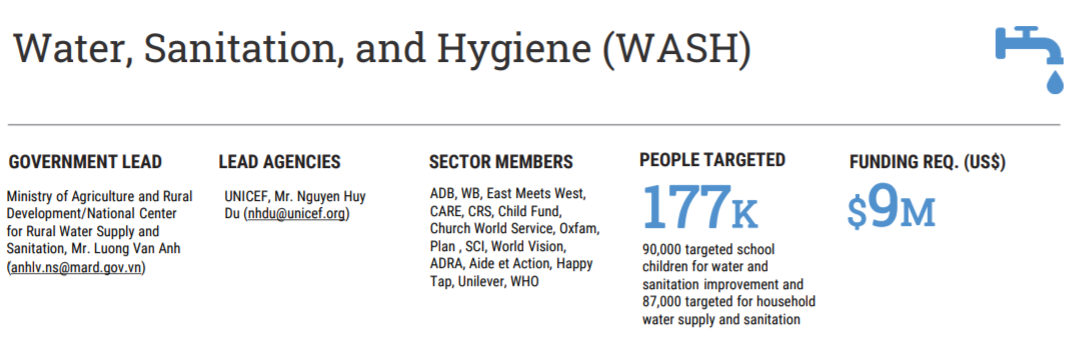
The current disaster has impacted communities' access to clean water supplies, as systems have been damaged or destroyed, and many people who have been evacuated do not have adequate access to safe and appropriate water sources and sanitation facilities. Affected populations urgently require safe and equitable access to a sufficient quantity and good quality of water by increasing the tariff subsidy for impacted households; improving water supply, quality and environment for households, schools and health centers in flood-affected regions by providing chemical supplies, water treatment and safe storage and water filters; and strengthening water quality monitoring.
As well as improving flood-affected people’s access to clean water, there is also an urgent need to improve access to hygienic latrines, many of which have been damaged or destroyed in the floods, safe excreta management; the provision of hygiene and dignity kits for women and girls; soap for heath staff in commune health stations; and awareness-raising campaigns and messaging to increase awareness of safe WASH practices in disaster response. Safe access to appropriate WASH services and facilities in health stations and schools has also been identified as a key immediate need.
Priority Response Activities:
Phase I - immediate activities
- Procure and distribute of WASH and dignity kits and water filters to the most vulnerable families with children, health centres and schools in the most affected communes and districts.
- Provide water treatment supplies for the most vulnerable families with children, health centres and schools in the most affected communes and districts to disinfect contaminated water sources.
- Provide safe water storage and water treatment products and facilities, including Aquatab tablets, Chloramine B, water tanks, soaps and hand sanitizers.
- Provide temporary and mobile safe latrine and, handwashing facilities at identified sites, taking into consideration COVID19, gender and protection risks of men and women, girls and boys, and persons with disabilities.
- Improve and upgrade WASH facilities for school children and health station to address an urgent need, particularly for children in the remote and most affected communities.
- Support the Government’s waste management efforts to test and monitor water quality in those impacted provinces
- Promote community engagement and hygiene practices based on joint rapid need assessment results in relation to the rapid contextual understanding of the social and cultural norms todetermine the public health risks, target groups for effective mitigation measures, such as hygiene awareness via different information channels (e.g. commune radio system and community public information board.)
- Work with MARD and PPC for piped water tariff subsidy for households in impacted regions then they could continuously use clean water.
Phase II – transition to early recovery
- Prevent potential water-borne disease outbreaks in the affected provinces through community mobilization for WASH behavioural change communication and provision of soap, hand sanitizers and infection prevention and control supplies.
- Improve WASH services in affected schools, health centres, including the improvement of drinking water safety and quality, rehabilitation of water supply facilities, water storage, gender-sensitive sanitation facilities and handwashing with soaps.
- Improve and upgrade WASH facilities for school children and health station to address urgent need, particularly for children.
- Promote faecal waste management (Open Defecation Free - ODF) and provide guidance on improving latrines after flooding.
- Improve the operation and maintenance of water schemes for sustainable water supply, including repair and rehabilitation of water supply systems and networks, in areas most affected, also focusing on local health centres and school facilities.
- Promote community engagement and hygiene practices based on deeper contextual understanding of the social and cultural norms to determine the public health risks, design and communicate IEC materials, track disease trends related to disasters; apply COVID-19 preventive methods (e.g. handwashing, maintaining a safe distance and face maskwearing.)
- Work with MARD and PPC to provide piped water tariff subsidy for households in impacted regions to ensure they can continuously access clean water.
Contact details
Mr. Kamal Malhotra
UN Resident Coordinator Viet Nam
kamal.malhotra@one.un.org
Mr. Alberto Solaro del Borgo
Disaster Risk Management Specialist, UN Resident Coordinator’s Office Viet Nam
alberto.solaro.del.borgo@one.un.org
Mr. Markus Werne
Head of Office, OCHA Regional Office for Asia and the Pacific
werne@un.org
