The model is being developed in the context of Viet Nam’s frequent exposure to various types of disasters, including storms, heavy rainfall, floods, flash floods, and landslides. In response to these risks, proactively evacuating people to safe areas before disasters occur is one of the key measures to protect lives, reduce disaster risks, and minimize losses.
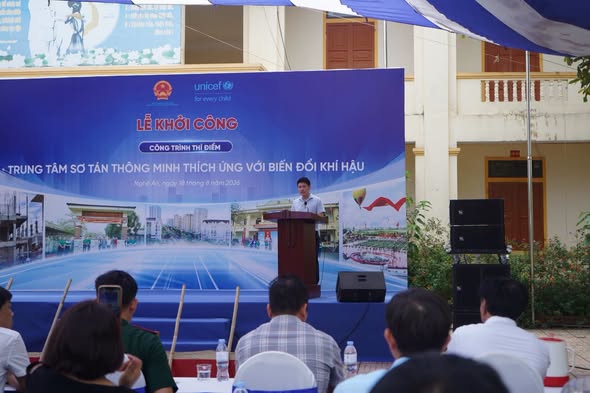
Evacuating people to safe areas before disasters occur is one of the key measures to reduce disaster risks.
However, many existing evacuation sites are adapted from public facilities that were not originally designed or adequately upgraded for emergency sheltering purposes. As a result, essential services such as electricity, water, sanitation, communications, and suitable living spaces may still face certain limitations during evacuation. In particular, the needs of children, women, persons with disabilities, and other vulnerable groups need to be taken into account when organizing and developing evacuation spaces.
Against this backdrop, the upgrading of Dang Thai Mai Secondary School into a smart, climate-resilient, child-centered evacuation center aims to strengthen the facility’s resilience to disasters in the locality while improving essential conditions for evacuation.
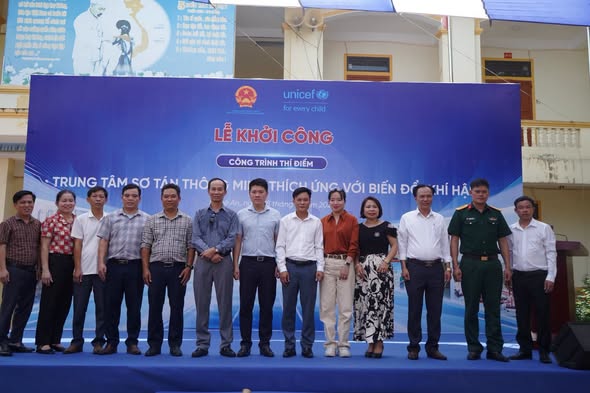
Dang Thai Mai Secondary School will be upgraded to enhance its resilience to various types of disasters.
According to the model introduced at the launch ceremony, the facility is expected to incorporate solutions including solar power and energy storage, emergency communications, early warning systems, and digital solutions for managing evacuees. These solutions are intended to enhance the facility’s capacity to operate during disasters while supporting the organization, management, and safety of people during evacuation.
A notable feature of the model is its multifunctional design. Under normal conditions, Dang Thai Mai Secondary School will continue to serve its educational function and support teaching and learning activities. When a disaster occurs, the facility can be converted into an evacuation center to receive and support people who need to evacuate from the surrounding area. This approach allows the facility to serve its regular functions while also being available for evacuation when necessary.
In addition to strengthening the resilience of the facility, the model aims to create a safe and child-friendly evacuation environment. This is an important component of the model, seeking to provide evacuation spaces that are better suited to children while more effectively addressing the needs of women, persons with disabilities, and other vulnerable groups during disaster-related evacuations.
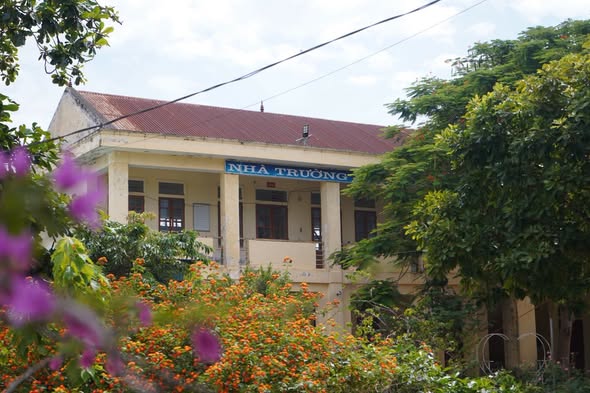
Developing smart schools contributes to creating safer schools in the face of disasters.
The upgrading of Dang Thai Mai Secondary School into a smart, climate-resilient, child-centered evacuation center is a pilot model intended to assess the effectiveness and further develop solutions related to infrastructure, evacuation conditions, and the application of digital tools for management. Through implementation, the model will provide lessons and experience on the potential application of similar approaches in other localities facing comparable disaster risks and conditions.
A key distinguishing feature of the model is its child-centered approach to the design and operation of the evacuation center.
For children, disasters not only pose risks to life and health but can also disrupt education, affect psychological well-being, and limit access to essential services. Therefore, an evacuation center located within a school needs to be organized in a way that ensures physical safety while creating an environment in which children can be protected and cared for throughout the evacuation period.
UNICEF identifies a safe learning environment as an important factor in children’s development and promotes solutions to help schools strengthen their capacity to respond to climate change, reduce disaster risks, and adopt sustainable energy solutions.
With its child-centered approach, combined with efforts to strengthen infrastructure resilience and improve essential evacuation conditions, the smart evacuation center model at Dang Thai Mai Secondary School aims to enhance community safety in the face of disasters while gradually developing solutions aligned with climate change adaptation requirements.
